
Plastics and Performativity in Burst by Ilana Jael
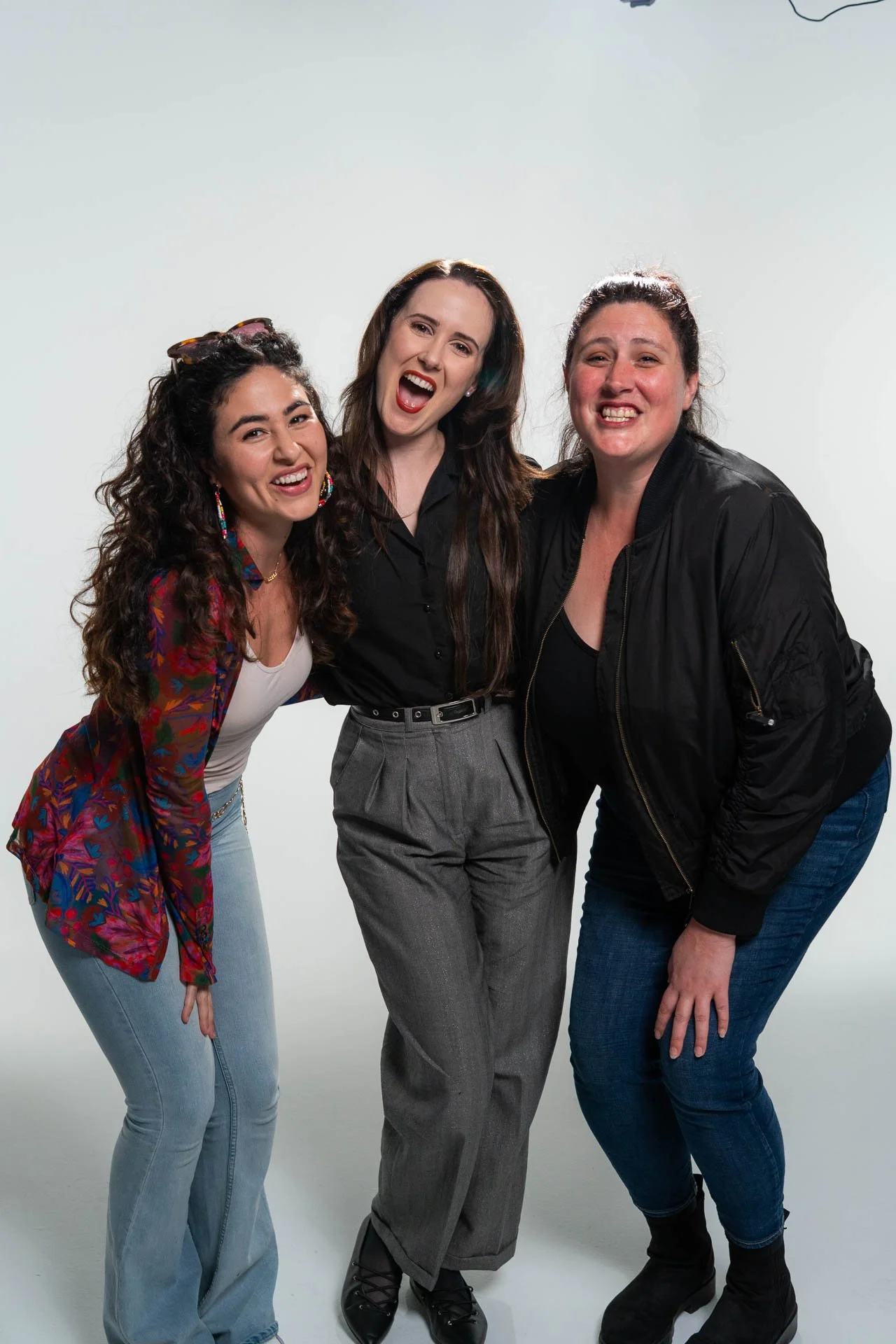
The cast of New City Players’ production of Burst, (from left to right) Dayana Morales as Alexis Lyons, Nicole Hulett as Sarah Boyd, and Mary Gundlach as Jennifer Weaver.
Somehow, a little more than a full season has come and gone since I’ve last had the chance to contribute any of my usual behind-the-scenes blogs— but in New City Players’ upcoming production of Rachel Bublitz’s Burst, I’ve found a play that’s well worth coming back to The Build for.
As the southeastern US premiere of a bold new work that was only staged for the first time a few years ago, Burst is the sort of show that’s right up my alley to write about— and that’s before we even get into my pre-existing fascination with several aspects of its subject matter. For one thing, Bublitz’s vision for the piece seems to have been clearly shaped by the true story of Theranos, a high-profile tech start-up that rose to prominence under the “visionary” leadership of the “genius” Elizabeth Holmes.
As charismatic CEO, Holmes managed to swindle her way into multi-million-dollar investments and contracts by creating the impression that Theranos had made a scientific breakthrough that would revolutionize blood-testing. Instead, the company’s house of cards quickly started to collapse as the extent of their deceptiveness was discovered, with Holmes ultimately facing serious criminal charges as well as public disgrace.
In a future post, I plan on diving even more deeply into the scope of this bizarre scandal, but first, I wanted to take a closer look into a different issue that Burst puts center stage. In a tense three-hander, the play dramatizes a fateful turning point for main character Sarah Boyd, the CEO of an imagined company called Tactix.
Like Holmes, Boyd has become something of a media darling on the basis of her cultivated persona and paradigm-shifting ambitions. And, like Theranos, Tactix has been promising to use pioneering technology to solve a problem once thought to be unsolvable. To paraphrase one of Boyd’s opening lines, the problem, in this case, is plastic, which she also says that Tactix is on the cutting edge of being able to fully biodegrade.
How much we believe this claim is something that shifts constantly over the course of Burst, which is one of the things that makes the play so compelling. But for everything else Boyd might be willing to exaggerate, her rhetoric is actually spot-on when it comes to the scope of the modern plastics problem.
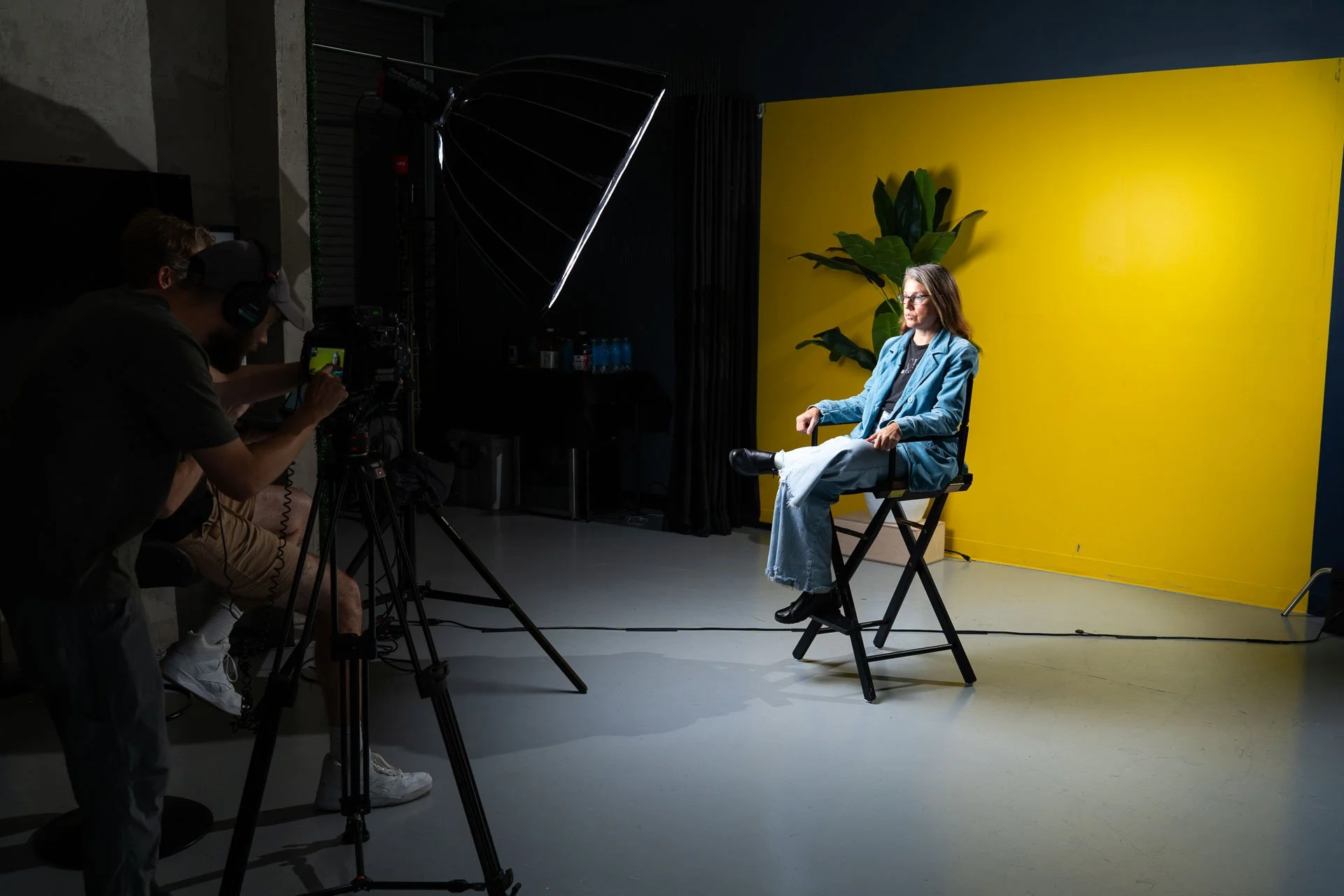
Director Elizabeth Price being interviewed for a behind the scenes look at Burst.
Though to call something “plastic” generally implies that it is cheap, phony, and expendable, one of the biggest problems with plastic is also the reason that it remains so seductive to legions of cost-cutting capitalists. For its flexibility and cost, plastic is actually surprisingly durable — the problem being that it stays durable long after it has served the purpose it was originally manufactured for.
In other words, it’s hard to get rid of plastic, and so much so that 7 billion of the 9 billion tons of plastic produced since it became ubiquitous still exists as plastic waste. This waste is estimated to be responsible for the deaths of 1 million seabirds and 100,000 marine mammals per year that ingest or become entangled in it.
When plastic does start to break down, it generally does so slowly and disastrously, releasing toxic chemicals if incinerated and climate-destroying greenhouse gasses when left in landfills. Even as plastic appears to degrade, much of it essentially remains plastic molecularly, forming tiny particles called microplastics which can become harmful when absorbed into the environment, into even our bodies themselves.
In various studies, microplastic particles have been detected at worrisomely high levels in human lungs, livers, kidneys, guts, bloodstream, and breast milk — and even in human brains.
Research is still ongoing into what health effects this proliferation of microplastics may be having on us, but the fact remains that human society has become so dependent on plastic that we ourselves have in a sense started to become plastic, which feels almost as apt a metaphor as it is unsettling as a truth.
Logo design for the fictional company featured in the play, Tactix.
Another particularly unsettling aspect of the plastics problem jumped out at me from my research because it speaks to the themes of Burst even more directly, and that’s the insufficiency of recycling as a remotely meaningful solution. Less than 5% of US plastic waste is actually recycled into new products, and that’s not because people haven’t been making enough effort to set apart their plastics in the appropriately labeled bins. Rather, a much higher percentage of plastic than most manufacturers would admit is simply not at all recyclable — and even for the types that theoretically are, the process is so expensive and inefficient compared to making new plastic that it almost isn’t even worth the trouble.
There’s also a sinister reason that these particular truths sound so surprising to many of us. When concerns about the sustainability of plastic started to emerge, the industries that benefited from its use seized on the “recycling” story as a convenient counter-narrative, using crafted campaigns to deliberately spread misinformation about how easy it is to repurpose plastic to make consumers feel better about purchasing plastic day-to-day.
Without giving too much away about Sarah Boyd or her secrets, learning this makes parts of Burst feel less like they’re exploring a chilling hypothetical scenario than using fiction to make visible a terrifying reality — which brings me to another of the play’s rich thematic threads that I wanted to take a moment to meditate on.
As a writer who often works in journalistic realms, I’m intimately familiar with the need to simplify complicated realities in order to tell comprehensible stories. Increasingly, I’m also aware of the way that my subjectivity shapes those stories, the way that by picking and choosing which facts to obscure and which to emphasize, I’m effectively nudging readers towards the version of the truth that I most want to convey.
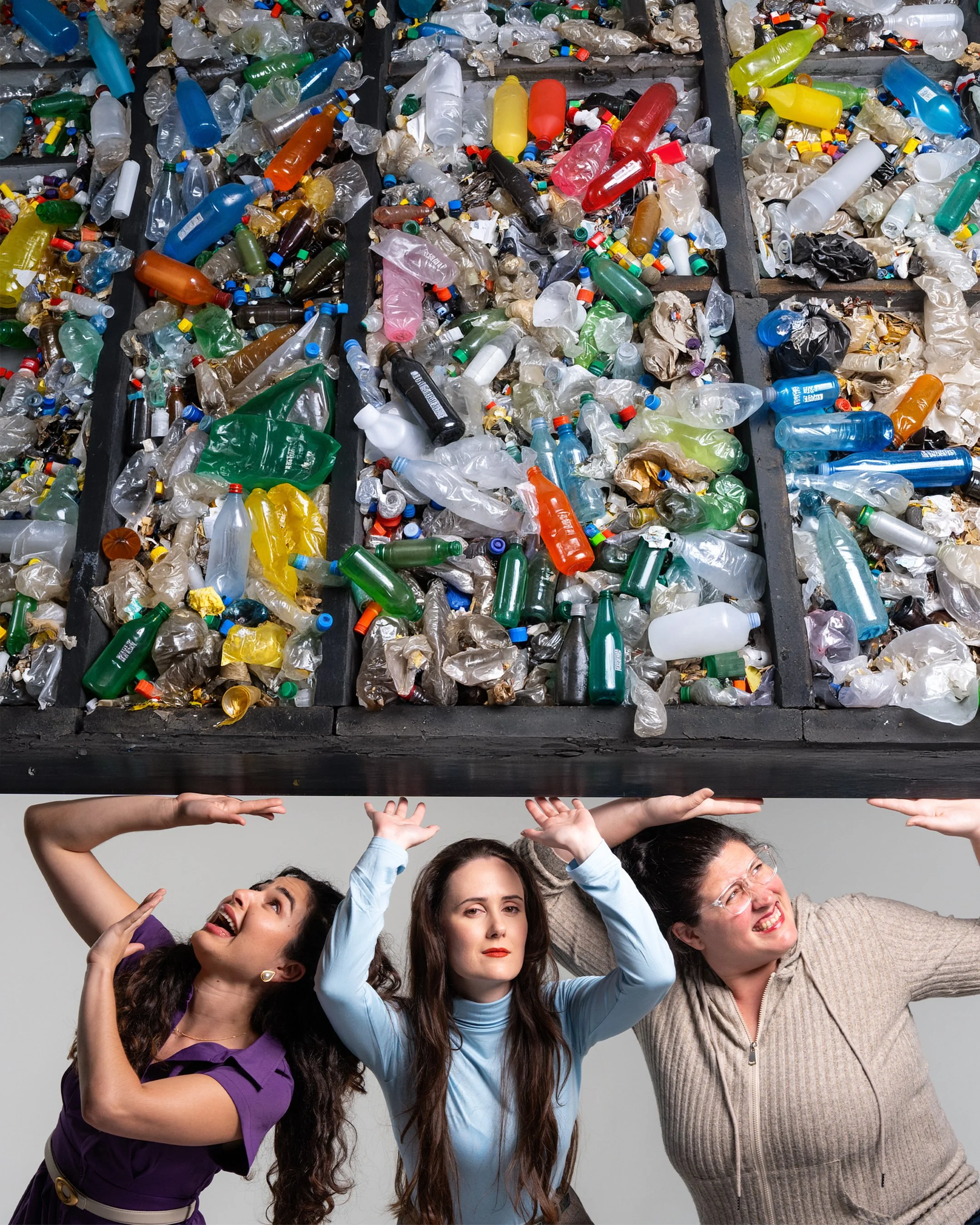
(From left to right) Dayana Morales as Alexis Lyons, Nicole Hulett as Sarah Boyd, and Mary Gundlach as Jennifer Weaver being crushed by the weight of plastic waste.
At first, the tight control that Sarah Boyd exerts over the “story” of Tactix could just be a more marketing-focused version of this — the crafting of camera-ready speeches, pivoting to pre-rehearsed soundbites if challenged, equivocating to avoid inconvenient details. It’s all just typical PR spin until suddenly it isn’t, and even then, it’s hard to say when exactly she crossed the line.
One of these early ambiguities comes from the fact that she’s willing to raise money for Tactix’s “real” work by selling socks made from recycled plastic bottles, despite the fact that she admits that the gimmick is a wash in terms of actual environmental impact.
“It’s all performative,” another character accuses.
“EVERYTHING is performative,” Sarah snaps back.
And maybe she’s not entirely wrong. When you find yourself amongst plastic people in an increasingly plastic world, being willing to compromise on your values is... almost just a kind of pragmatism.
You see, the biggest problem with plastic is that people like plastic. They’re willing to pay for plastic, for that sleek superficial sheen. In the United States alone, the plastics industry is responsible for generating an economic output of about 1.1 trillion dollars annually. And I fear that means that plastic is here to stay.
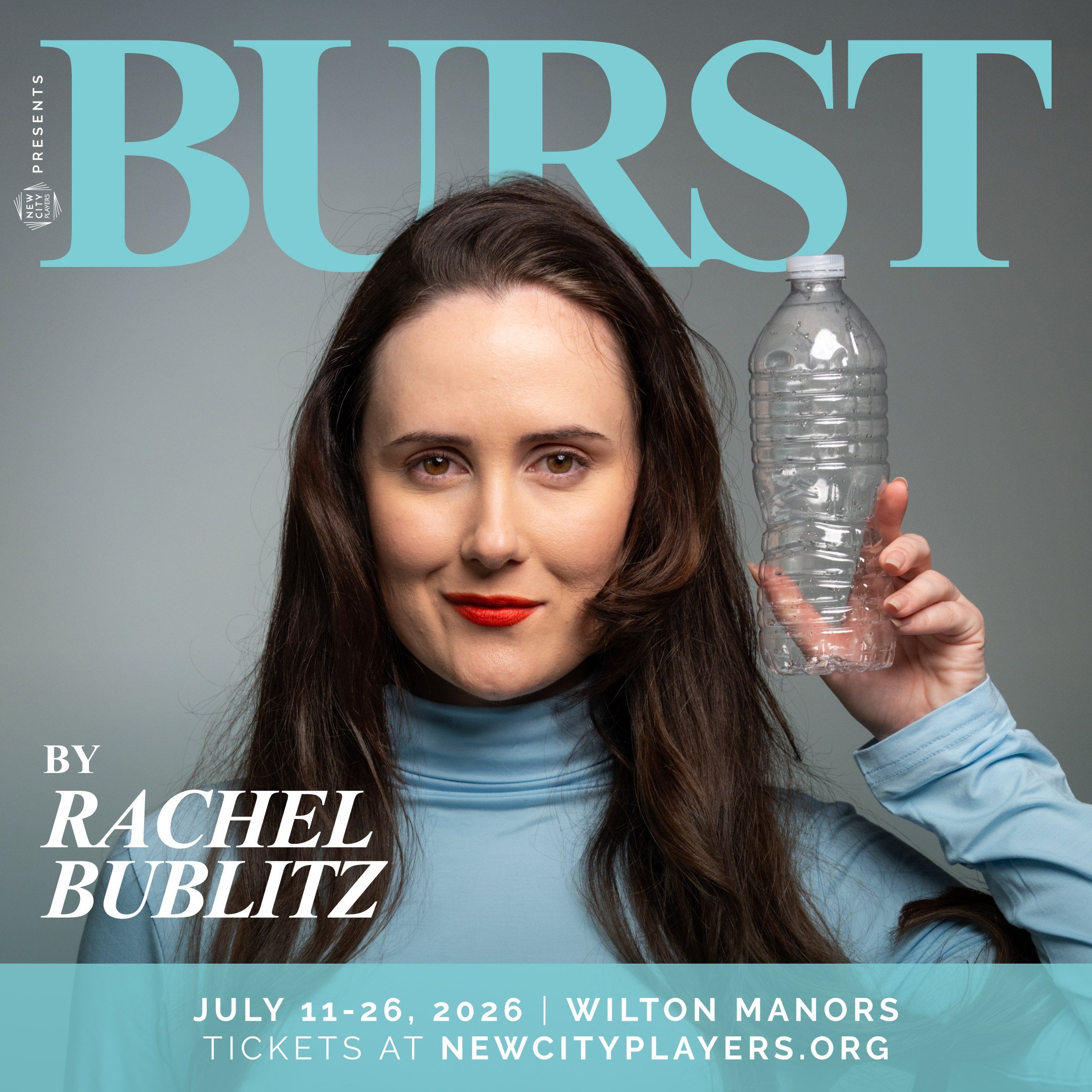
Burst
by Rachel Bublitz
Directed by Elizabeth Price
Southeastern Premiere
A sharp, dark comedy making its southeastern U.S. premiere, Burst unfolds over one late night in the CEO's office at Tactix — a tech company on a mission to eliminate plastic from the earth. When a tenacious journalist and a wavering CTO arrive uninvited and threaten to expose the gap between the company's promises and its reality, the play puts a spotlight on corporate responsibility, the seduction of big ideas, and the price of ambition.
WHEN
July 10 - Pay What You Wish Preview
July 11-26, 2026
PRICE
$40-45
Make sure to plan your visit after booking tickets!